Most new houses in Britain are insulated with PIR boards. They are the orange foam panels on every site, and they are insulating roughly half of the country. We have stopped using them.
The reasons are simple and slow. PIR is a petrochemical product with a very high embodied-carbon footprint. The board you nail to a stud wall takes more carbon to make than the wall will save in operational heating for the first seven or eight years. It is also not breathable, which makes it the wrong material for a Victorian solid wall, where moisture needs to move through the build-up. And it is difficult to recycle.
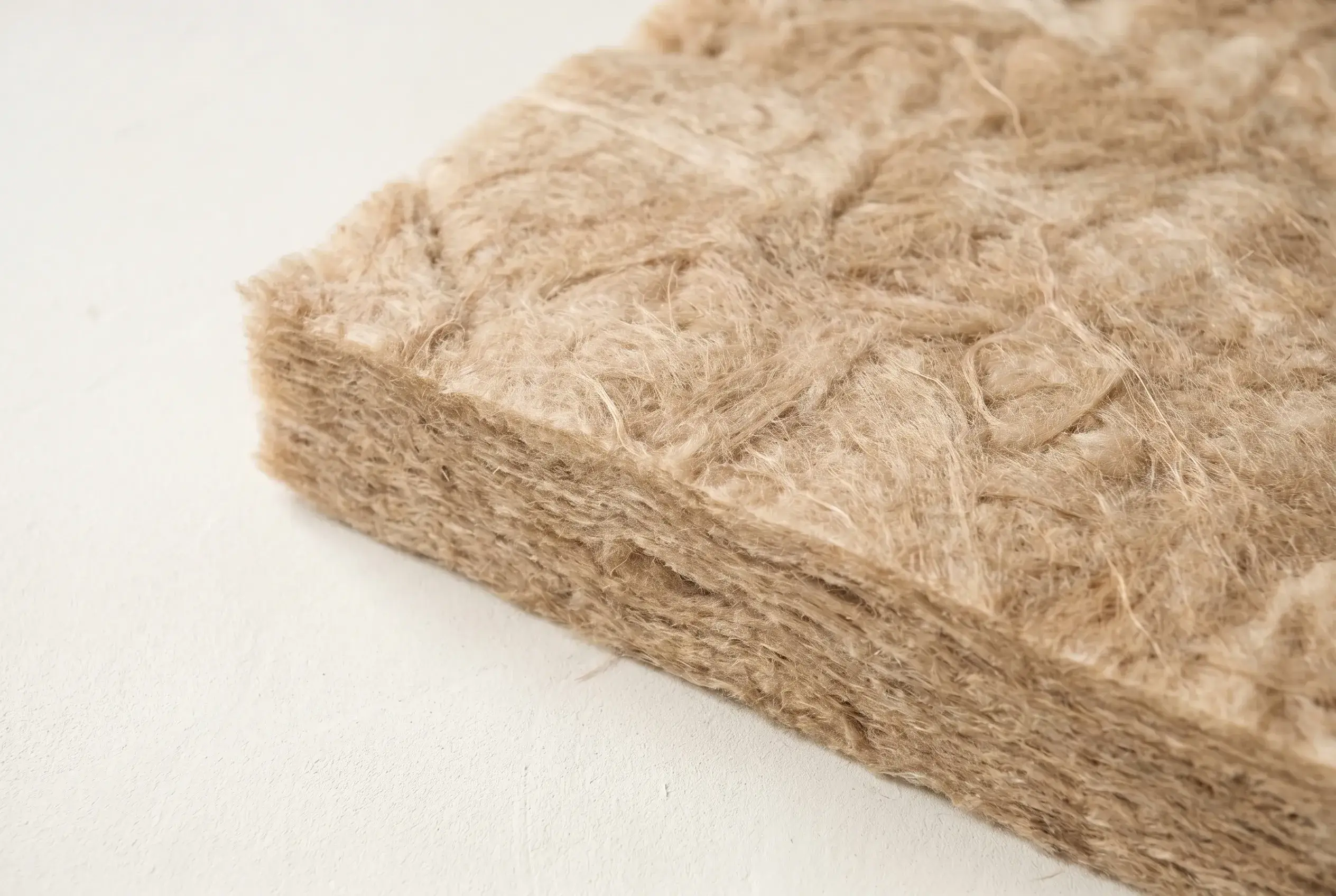
The alternative is natural fibre. Sheep wool is the easiest to talk about, because the supply chain is honest: it is a by-product of the meat industry that would otherwise be burned. It has roughly the same thermal performance as mineral wool, breathes, absorbs and releases humidity, and lasts as long as the building. Hemp and wood-fibre boards do similar things.
The trade-off is cost. Sheep wool is currently about two and a half times the price of PIR. The headline number is real, but the lifetime number tells a different story: a house insulated in sheep wool will not need its build-up redone in twenty years, because the material has not failed.
It is also easier to install. The fitter cuts it with scissors. There is no dust, no taping, no waste skip full of foam offcuts. The fitters we work with prefer it. Make of that what you will.