
There is a temptation in a new build to add lights until the rooms are evenly lit. We have learned to resist it.
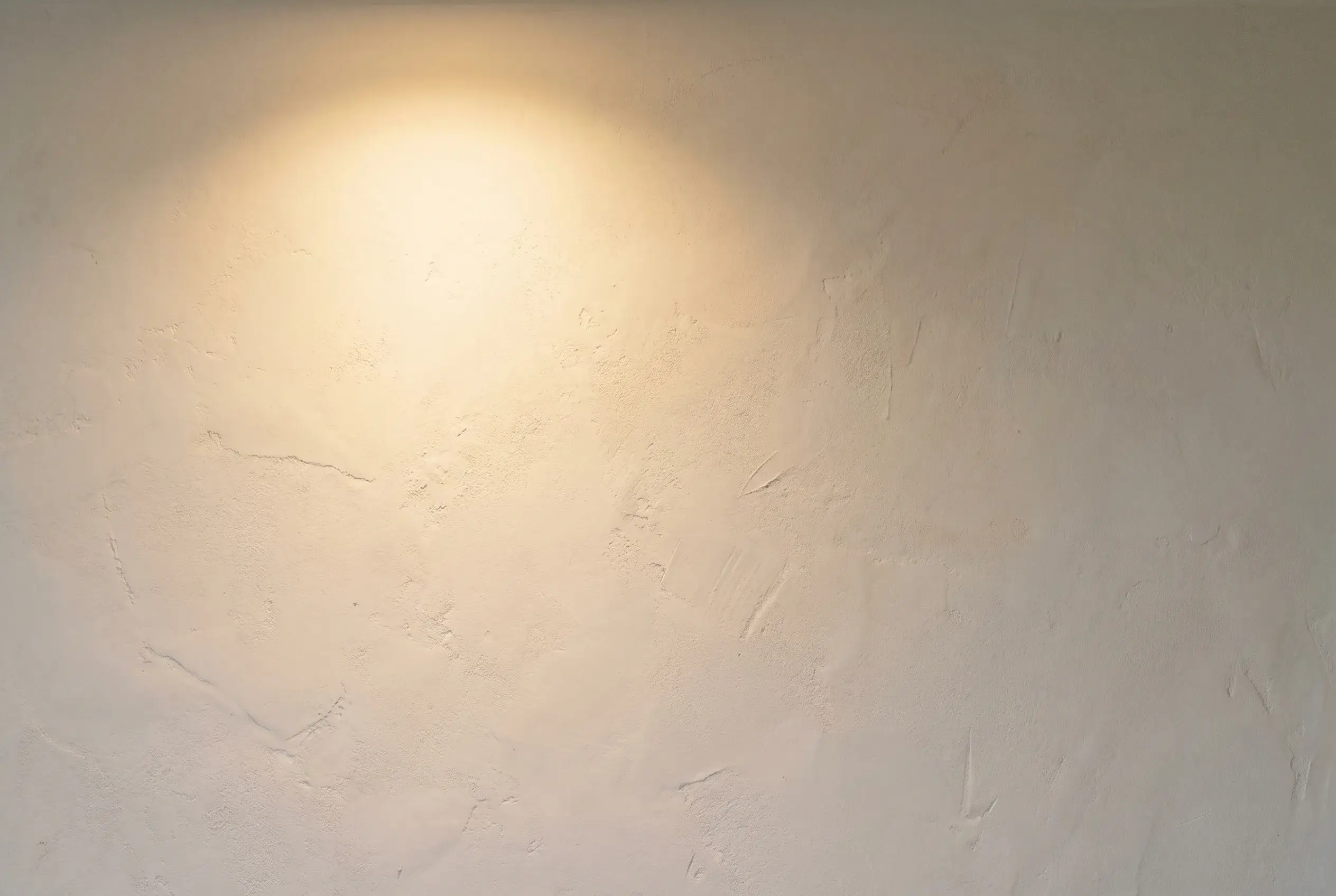
The picture is a corner of a hallway in a house we finished last year. There is one fitting, set into the ceiling about a metre back from the wall, washing the plaster from above. There are no skirting-level lights, no downlights in the corridor, no second wash from the opposite wall. The light is doing the work alone.
What this gets you is contrast. The hallway is dark; the wall is bright; the texture of the plaster shows because the light is grazing it. You feel where you are. There is somewhere lit and somewhere not, and the architecture is what tells you which is which.
Even lighting is a sort of cinema-screen effect — flat, bright, generic. It is good for warehouses. It is poor for living. A house wants its corners darker than its centres. It wants its walls brighter than its floor, in the evening, and dimmer than its windows, in the day.
The plan we draw early includes where the single light goes. Not the lighting plan: the architectural plan. The light fitting is not a finish; it is part of the wall.