
A window is mostly a piece of glass and four edges. The four edges are where the work is. Most of the time spent designing a window goes into how those edges meet whatever they touch — brick, plaster, oak, render, sky.
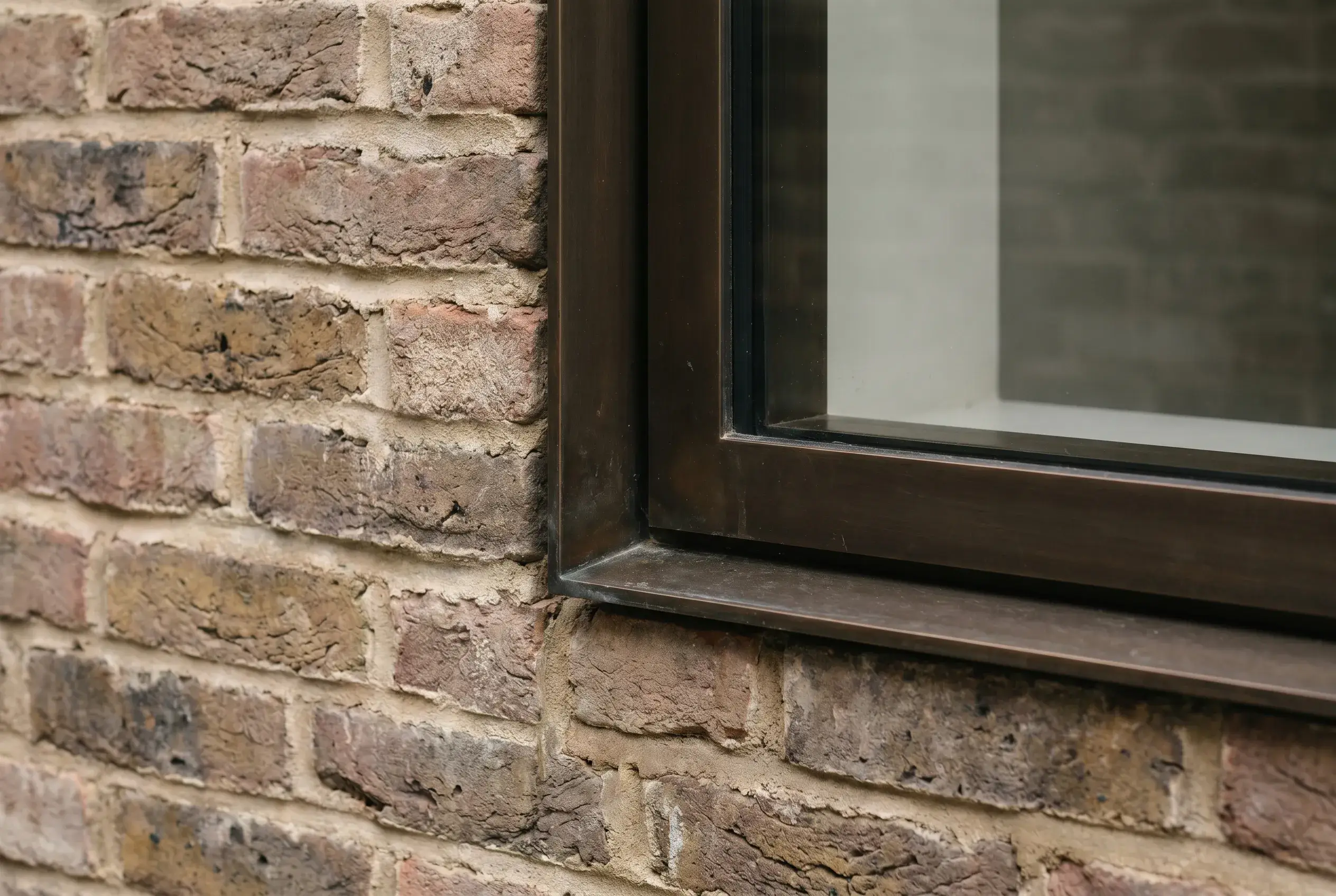
This bronze frame sits proud of the brickwork by twelve millimetres, with a shadow gap below the cill. The frame reads as a piece of metal placed in front of a wall, not pushed into it. The brick courses run uninterrupted up to the reveal and then stop, and the bronze takes over.
It is a small choice. It would have been quicker to set the frame flush. But flush windows lose their shape after a few years — the silicone catches dust, the brick courses look like they are pretending to be paper, the wall stops feeling like a wall. The deeper reveal keeps both materials honest.
The bronze is left to weather. In ten years it will look quieter than it does now; in twenty it will be the same colour as the mortar. The brick is London stock, lime-mortared, picked from a stockpile thirty miles from the site. It will outlast the metal.
We draw the junction first and the window second. By the time you draw the window, the junction has already told you what the window can be.