
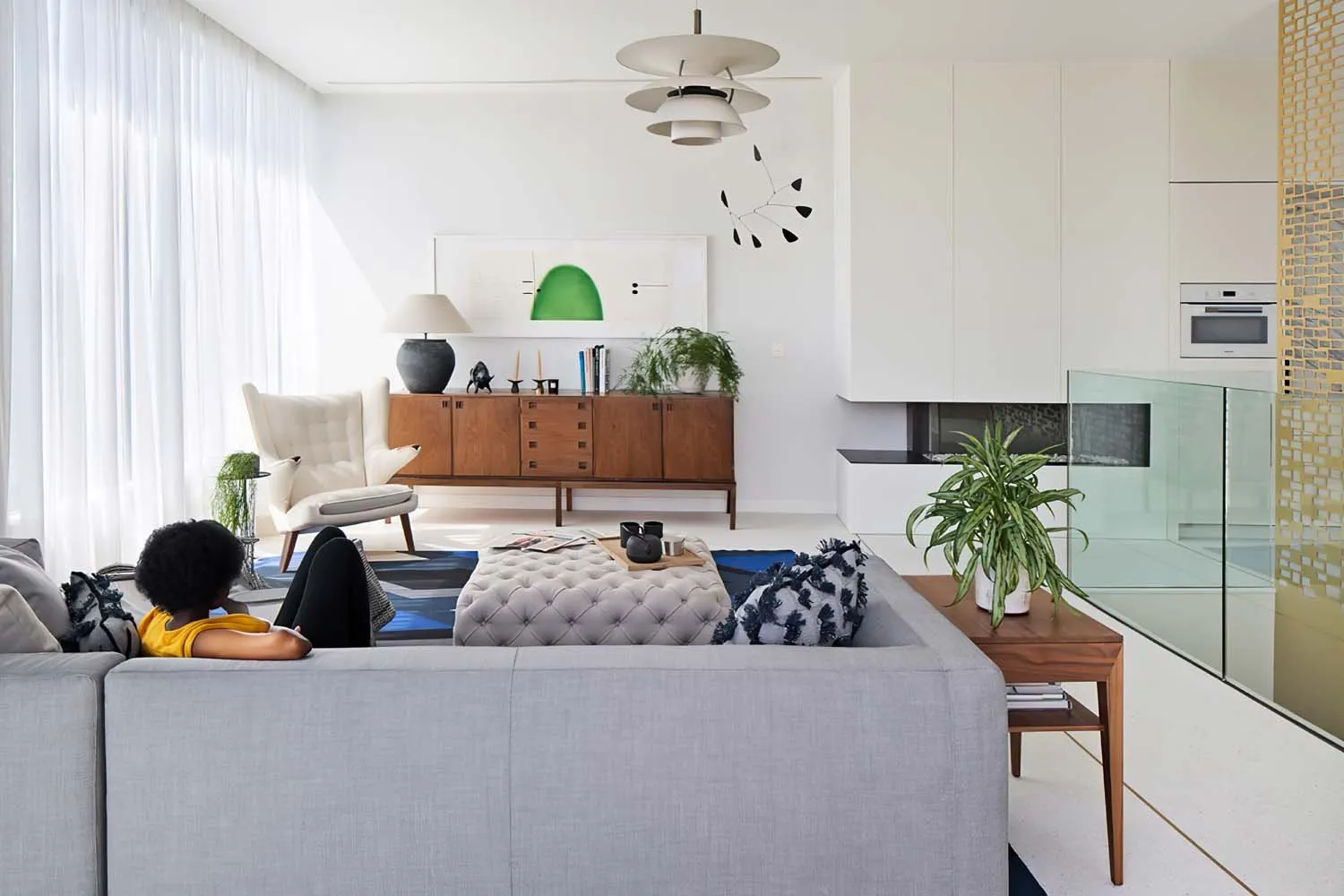
We design houses around light. It is the first thing we draw and the last thing we check, and it is the single quality that separates a house that is merely well finished from one that is genuinely good to be in. Light is also free, which makes it the most powerful material a house has, and the easiest to waste. Here is how we think about it.
Start with the sun, not the plan
Before we settle a single room, we work out where the sun goes across the day and across the year. Which rooms want the low gold of the morning, which want the long evening, which can sit happily in cool north light. A kitchen that catches the morning, a sitting room that holds the last of the day: these are decisions you can only make once, at the start, by orienting the plan to the sky rather than to the plot boundary.
Light from above changes everything
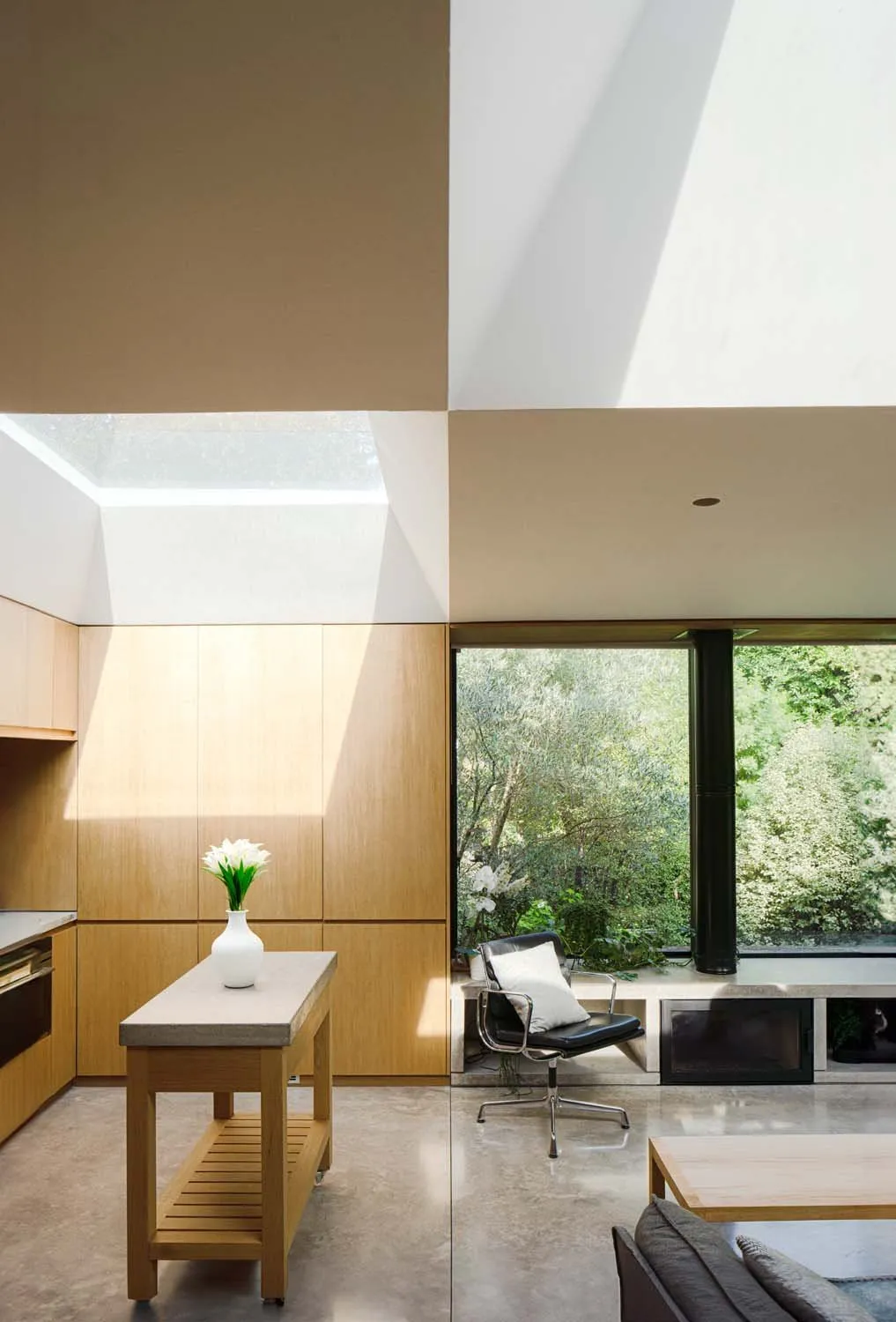
A window gives you a view and light from one side. A rooflight gives you light that moves across a room through the day, washing down a wall, marking the hours. In deep-plan houses and London terraces, where the middle of the house is always the darkest part, a well-placed rooflight can transform a whole floor. It is often the cheapest, most dramatic move available, and the one most worth spending on.
Frame the light, do not flood it
The instinct to glaze everything almost always backfires. A wall of glass gives you glare in summer, cold in winter, nowhere to put a sofa and nowhere for the eye to rest. Light is more beautiful when it is given an edge: a tall slot beside a chimney, a window held in a deep reveal, a single large opening onto the best aspect with solid wall either side. Contrast is what makes light read. A room that is bright everywhere feels flat. A room with one shaft of sun across a quiet wall feels alive.
“The test we use is half past four on a February afternoon. If a room is still good to be in then, in the worst light of the year, it is a good room. The summer takes care of itself.”
Let surfaces do the work
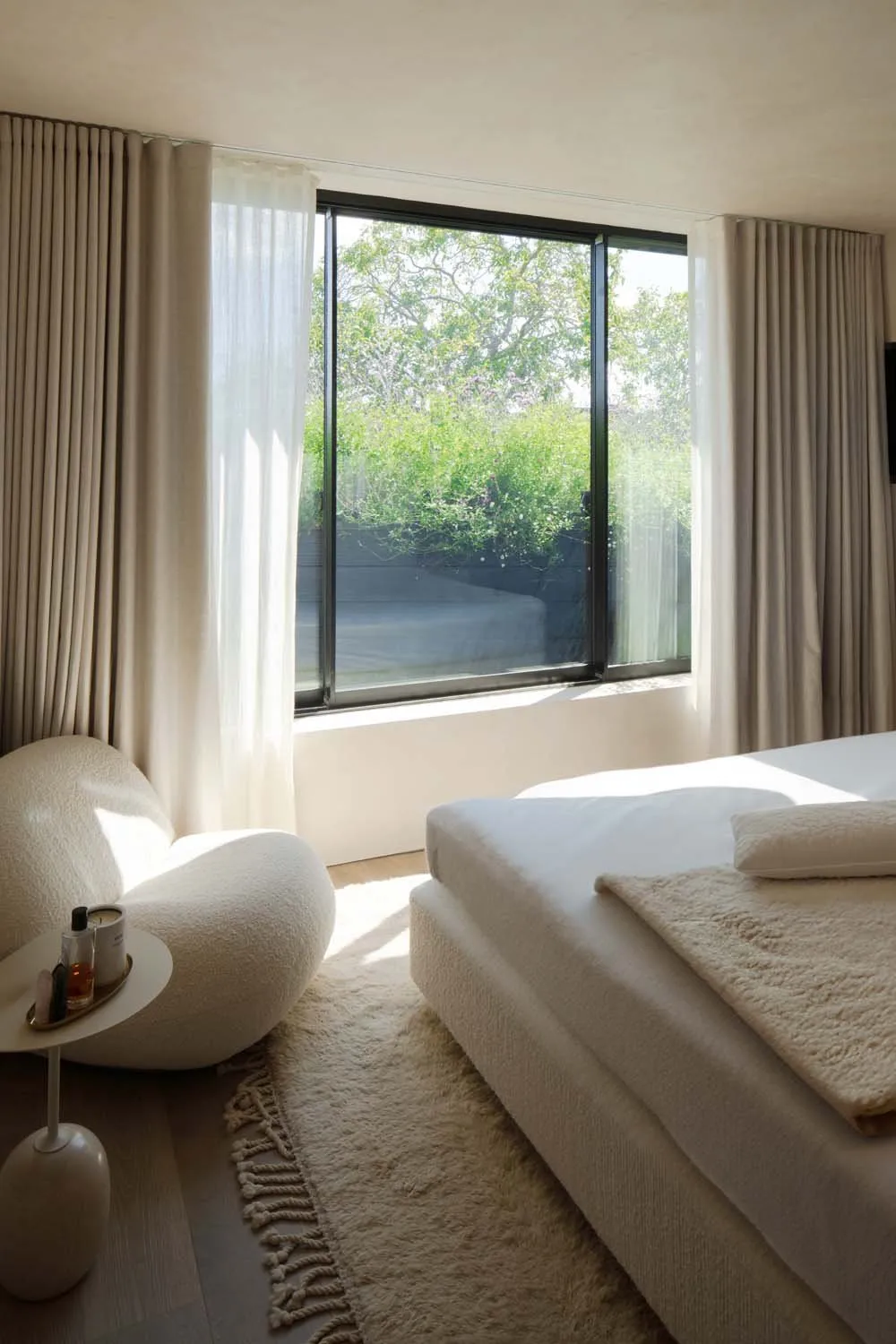
Light is only as good as what it lands on. Pale, slightly textured plaster gathers and spreads it; flat white paint can make it glare. A timber floor warms it; a polished surface bounces it around in ways that can be lovely or harsh. We choose finishes partly for how they hold light at different times of day, because the same room can feel generous or mean depending entirely on what the light has to work with.
Why it matters more than it sounds
This can read as an aesthetic preference. It is really about how it feels to live somewhere. Light is the thing you stop noticing and never stop responding to. A house that handles it well is calmer, and people are calmer in it, through the dark months as much as the bright ones. It is, quietly, the closest thing architecture has to a guarantee of wellbeing, and it is why we put it first.
If you want a house that is good to be in hour by hour, that is the work we care about most. See more of our houses, or tell us about yours.