
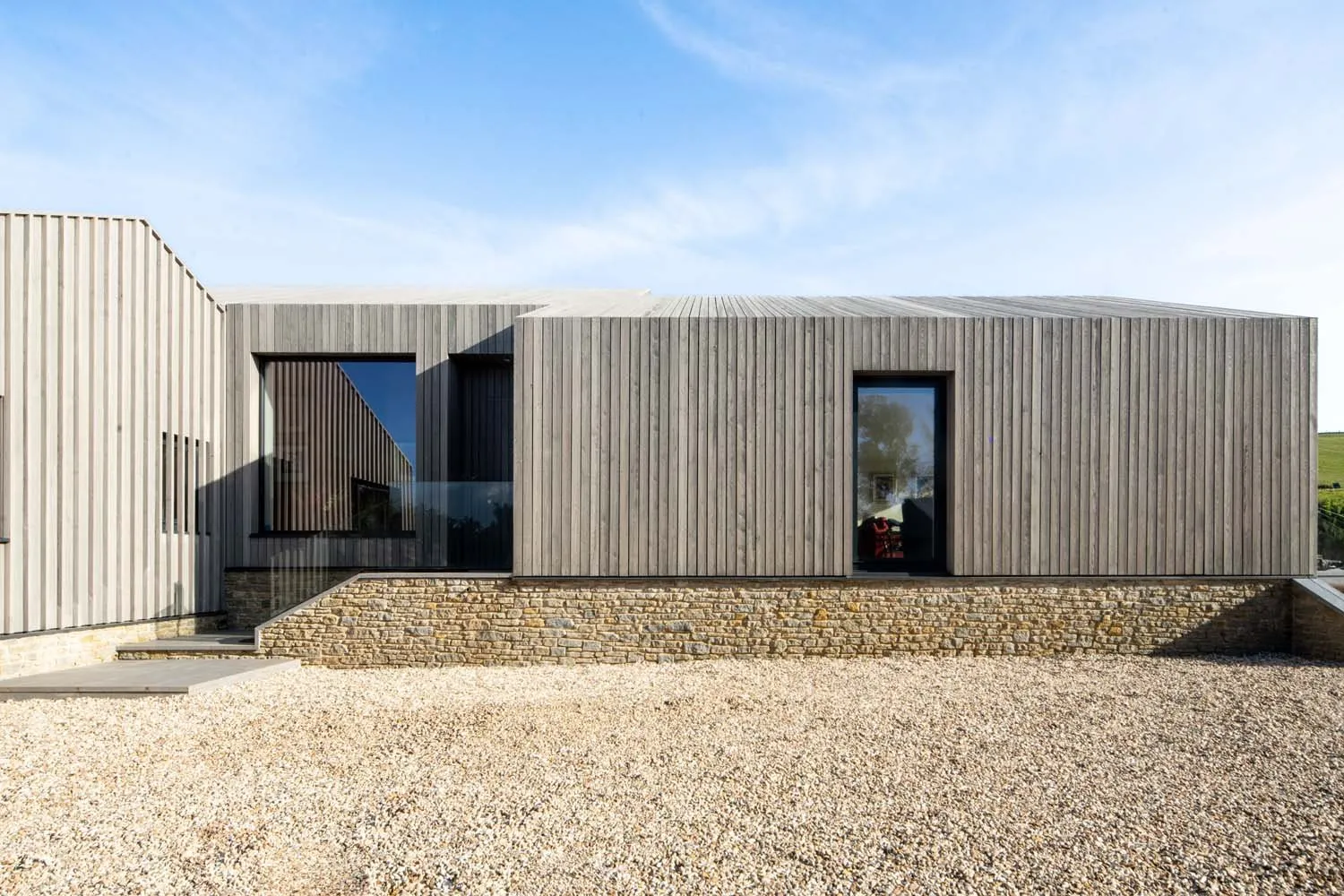
Most people who say they want a modern house do not want it to look like the new houses they drive past. They want light, space and good rooms, but they do not want the thin, shiny, slightly temporary quality that so much new building has. The good news is that the new-build look is a set of choices, and you can simply not make them.
Proportion before everything
The first thing the eye reads is proportion, and it is the cheapest thing to get right and the most expensive to get wrong. The size of a window relative to the wall around it. The height of a room. The rhythm of openings across a facade. Old buildings we admire tend to have proportions that were settled by centuries of trial and error. A new house feels wrong most often because the proportions are off, not because the materials are cheap.
Materials that get better, not worse
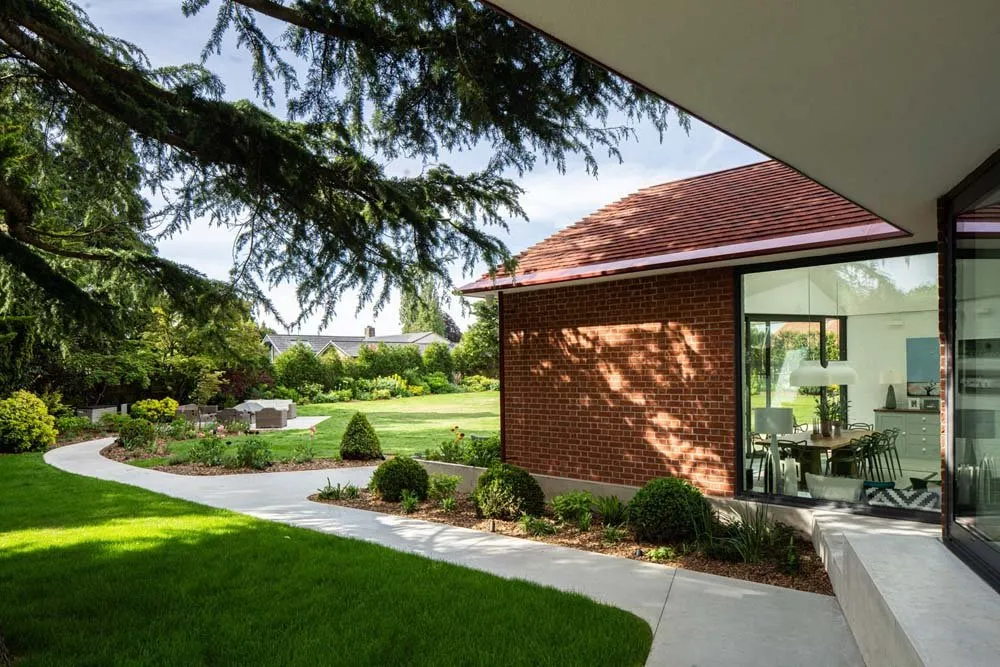
Plastic-coated everything looks its best on the day it is installed and goes downhill from there. We prefer materials that improve with weather and use: brick that will still be handsome in a century, timber allowed to silver, stone, lime mortar, metal that develops a patina. These cost a little more and ask to be detailed properly, but they are the difference between a house that ages and one that just wears out.
Depth, shadow and a proper roof
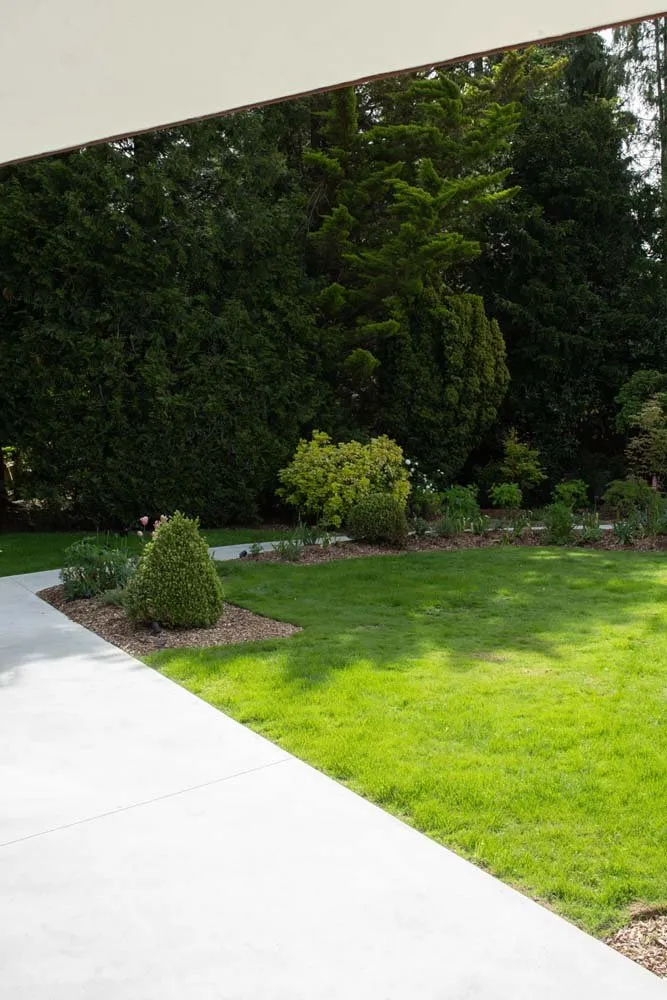
Cheap building is flat. Everything sits in the same plane: thin windows flush with thin walls, no reveal, no overhang, no shadow. A house feels solid when it has depth. Windows set back into the wall. A roof with a real eave that throws a shadow line and keeps the weather off the facade. These are not expensive gestures, but they are the ones value engineering tends to delete first, which is exactly why ordinary new houses look the way they do.
“A new house can have all the light and space of the present and still feel as though it has always been there. That is not nostalgia. It is just proportion, depth and good materials, held to.”
Restraint
The last thing, and the hardest, is to do less. Fewer materials, fewer changes of direction, fewer ideas, each one done properly. The new houses that look cheap are usually trying too hard: three claddings, a feature gable, a token bit of render. A house that knows what it is, and repeats a small number of good decisions calmly across the whole building, will always look more expensive than it was. That restraint is most of what we are paid for.
If you are planning a new house and want it to feel like this, we would like to hear about it. See more of our houses, or get in touch.